
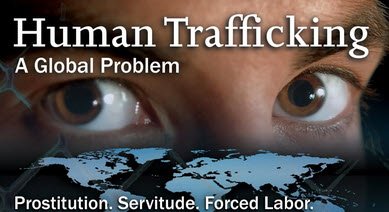
About Human Trafficking
Trafficking is a crime. Primarily, they include three significant types of trafficking.
Drug Trafficking, Arms Trafficking, and Human Trafficking.
In this presentation, the focus will be on educating the public on the impact of human trafficking and how pornography influences human trafficking. The largest criminal enterprise globally is drug smuggling; the second largest criminal enterprise (and growing) is human trafficking.
A drug can only be shipped once and used only once. A person can be used and reused multiple times daily. Many women have testified to being raped nine to ten times a day, every day of the week, throughout the year. One woman stated that, in the two years she was trafficked, she was raped at least 1,500 times. She was only 15 at the time. This is under sex trafficking and labor trafficking. Females who are used for labor, in labor trafficking, have reported sexual assault, sexual abuse, and rape, as well as those who are under sex trafficking.
External Links:

Motto:
Helping those in Human Trafficking through the love of Christ Jesus.
Mission Statement:
Freedom Abolition, through Christ’s love, we are unwavering in our commitment to dismantling the chains of human trafficking and restoring dignity to those who have been oppressed. Through advocacy, education, and direct support, we empower individuals and communities to recognize, combat, and prevent trafficking in all its forms.
Vision Statement:
Through Christ’s love and the church, empowering communities to unite against Human Trafficking, we envision a world where collaboration ignites change, and every voice advocates for freedom and dignity.
Purpose:
Imagine a future where communities are effectively united against Human Trafficking. What steps do they believe are essential for achieving this vision, and how do they plan to play a role in making it a reality through your education and career?
What is Human Trafficking?

Human Trafficking includes Sex Trafficking, Labor Trafficking, Organ Trafficking, and Child Trafficking. Subcategories include Sexting, Sextortion, Debt Bondage, organ harvesting, and forced labor.
The U.S. Department of Justice defines Human Trafficking as: Human Trafficking is a crime involving the exploitation of a person for labor, services, or commercial sex. The Trafficking Victims Protection Act of 2000 and its subsequent reauthorizations recognize and define two primary forms of human trafficking: Sex trafficking is the recruitment, harboring, transportation, provision, obtaining, patronizing, or soliciting of a person for the purpose of a commercial sex act in which a commercial sex act is induced by force, fraud, or coercion, or in which the person induced to perform such act has not attained 18 years of age. (22 U.S.C. § 7102(11)(A)).
Forced labor is the recruitment, harboring, transportation, provision, or obtaining of a person for labor or services through the use of force, fraud, or coercion for the purpose of subjection to involuntary servitude, peonage, debt bondage, or slavery. (22 U.S.C. § 7102(11)(B)). Additional legal definitions are contained in 18 U.S.C. Chapter 77 (criminal definitions) and 19 U.S.C. § 1307 (includes definition of “forced labor” for purposes of implementing the federal prohibition on importation of goods produced with forced labor). (Justice).